Arancina or Arancino: How Palermo and Catania Split Over a Rice Ball
Order an arancino in Palermo and the person behind the counter will hand it over. Then correct you. In Palermo it's an arancina, feminine, round like the orange it's named after. Drive two and a half hours east to Catania and it's an arancino, masculine, often shaped into a cone.
Same fried rice ball, more or less. Two genders, two shapes, and a lot of pride on both sides.
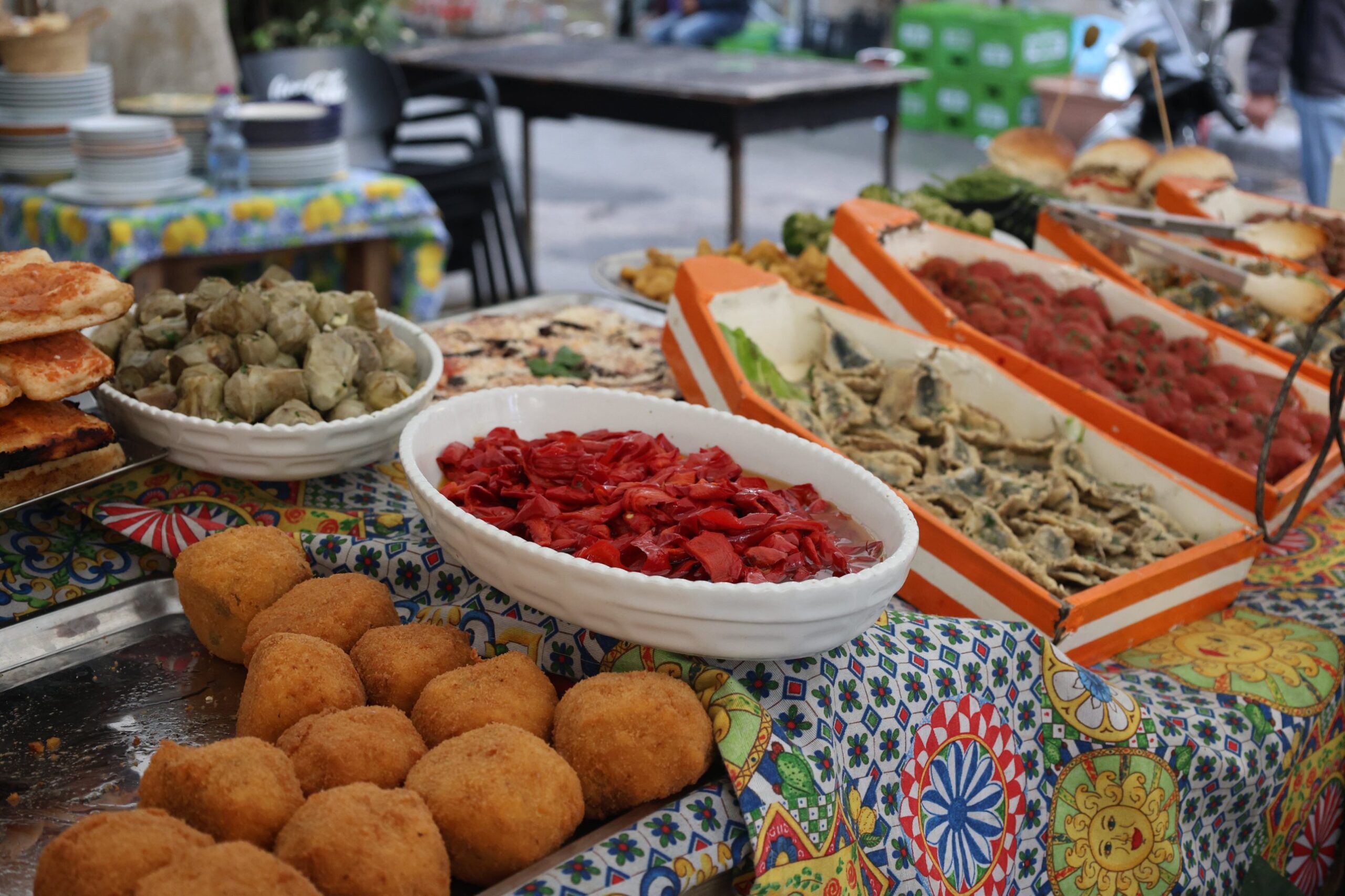
Photo: Media Gallery
These are the round kind, a dozen of them stacked on a steel tray at the front of a street stall. Behind them, the usual company: a bowl of roasted red peppers in oil, stuffed artichokes, battered fish in orange-painted wooden trays, meatballs in tomato sauce. The tablecloth is printed with Sicilian cart wheels and smiling suns.
What it is
An arancina is cooked rice, usually coloured with saffron, shaped around a filling, rolled in breadcrumbs and deep-fried. The two classic fillings are:
- Alla carne: meat ragù with peas, often with a cube of cheese in the middle.
- Al burro: ham and mozzarella (or another melting cheese), sometimes with béchamel. In Palermo the name means "with butter", from the butter in the rice and the filling.
After that, anything goes. Spinach and mozzarella, ham and pistachio, salmon, mushroom, eggplant alla Norma, and sweet ones with chocolate or Nutella around Santa Lucia.
Round in the west, pointed in the east
The split follows the island. In Palermo and western Sicily the name is arancina and the shape is round. In Catania, Messina and the east it's arancino, round or pointed. Catania's pointed version is usually said to copy the shape of Etna.
Bars on both sides also make plenty of round ones in several flavours, so look at the label on the tray or ask what's inside.
So who's right?
The Accademia della Crusca, Italy's oldest language authority, looked into it and gave the diplomatic answer: both forms are correct. The name has a feminine and a masculine version depending on where you are.
The Crusca's research also notes that the masculine arancinu appears in older written sources, from the nineteenth century. Some Palermitans argue the feminine is more faithful, since the fruit, arancia, is feminine in standard Italian. Others point out that in Sicilian dialect the fruit and the tree share the masculine word aranciu, so arancinu simply means a little orange.
Neither city cares much about the ruling. Gambero Rosso's guide to Catania's best still puts it plainly: singular, masculine, preferably conical, Crusca or no Crusca.
English has picked a side, at least on paper: the Oxford English Dictionary added arancini, the masculine plural.
How to order it right
- In Palermo: un'arancina alla carne, plural arancine.
- In Catania: un arancino al ragù, plural arancini.
- Eat it hot, from paper, standing up. A good one is crisp outside, with the rice holding together, and a filling that's hot all the way through.
- Expect about €2 to €3 at a bar or rosticceria in either city as of late 2026, more for big or fancy ones.
- On December 13, Santa Lucia, Palermo eats them in industrial quantities. That story is in Santa Lucia in Palermo.
At home: cook arborio or another short-grain rice in salted water with a pinch of saffron until just done, stir in butter and grated caciocavallo or parmesan, and let it cool completely, ideally overnight. Cupping a handful in a wet palm, press a spoonful of thick ragù with peas into the middle, close the rice around it, then roll in flour, a thin flour-and-water batter, and breadcrumbs. Fry at about 170°C until deep gold.
Seen a whole tray? The Ballarò market post has one bitten open, next to the octopus.