Palermo Market Grills: Mangia e Bevi, Stigghiola and How to Order From the Brace
You smell a Palermo market grill before you see it. Pork fat, charcoal, lemon. Then the smoke, rolling sideways across the lane, and a man behind a wooden block with a knife in his hand.
Palermitans call this kind of cooking arrusti e mancia, roast and eat. No menu worth the name. You point at what's on the grill, it gets cut on the block, and you eat it standing up, with your fingers, as hot as you can stand it.
What's on the grill
The grill in this photo is a good example of a market brace. In front, several long rolls of pork wrapped around spring onions, the green tops sticking out of the ends. Next to them, thick slices of pork on the bars, and below, a raw cut waiting its turn. At the bottom edge, a coil of sausage. On the left, a tray of rolls already cooked, with half a lemon.
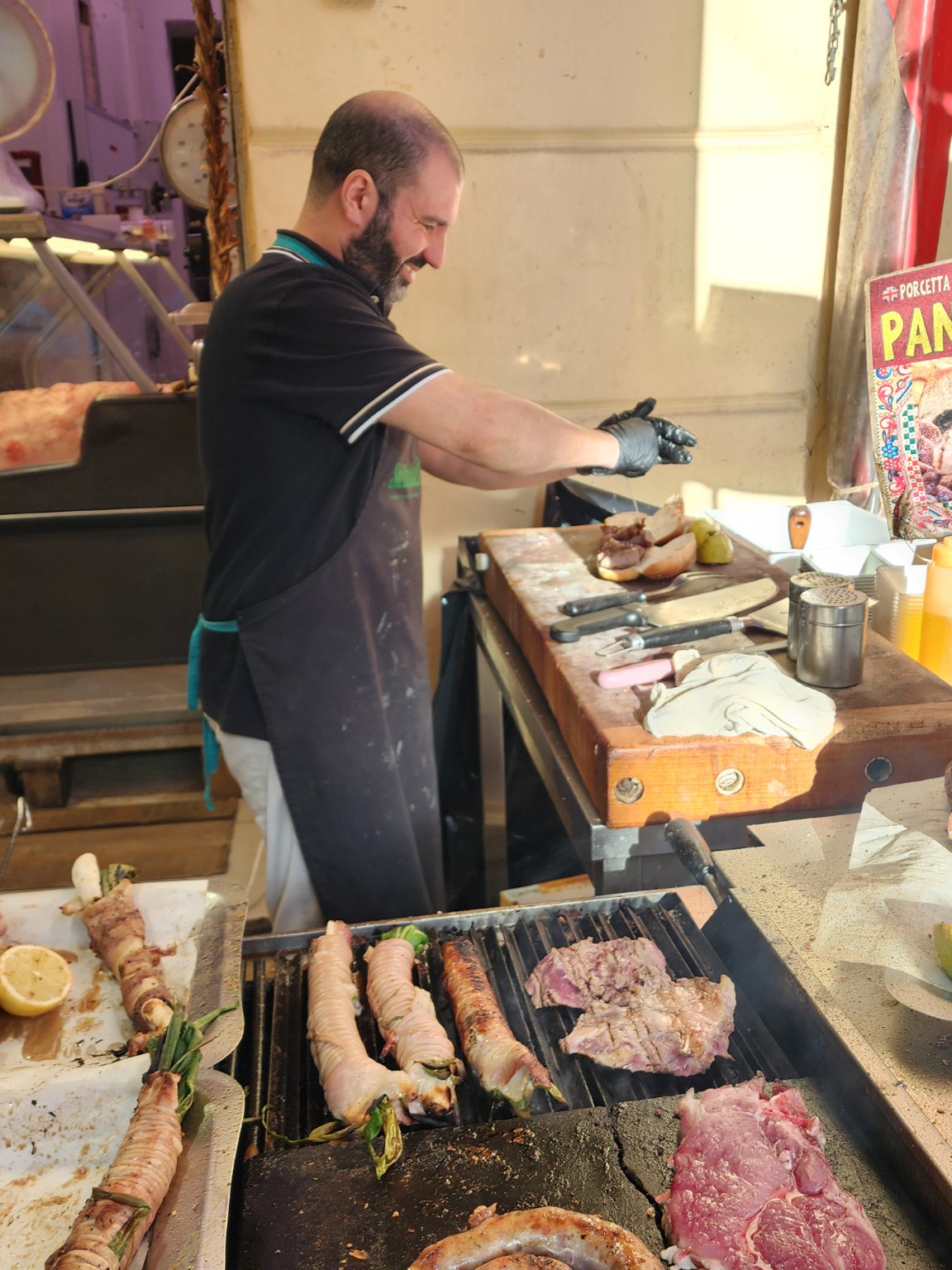
Behind the grill, the vendor in black gloves is mid-gesture, laughing, a cutting board and two cleavers in front of him. A sign on the right is cut off, but the word porchetta is visible, and the bread rolls on the board say sandwiches are on offer too.
Mangia e bevi. Those wrapped rolls are the Palermo classic: a fat spring onion wrapped in a strip of fresh pancetta and grilled until the fat crisps and the onion goes soft and sweet in its own steam. The name means "eat and drink", which tells you what it's for. In Catania the same thing is called cipollata. Families grill them at Easter picnics in the Favorita park; the markets grill them all year.
Salsiccia. Pork sausage, often in a long coil held flat with skewers, sometimes with fennel seed. Cut into lengths and handed over on paper.
Pork slices and porchetta. Grilled pork or roast porchetta, sliced into a bun if you want a sandwich.
Stigghiola, the one people dare each other to eat
The most Palermo thing you can order from a grill is stigghiola. It's lamb or veal intestine, washed, seasoned with salt and pepper, wound around a spring onion or a sprig of parsley, and grilled over charcoal. The cooks are called stigghiulari, and they're often set up away from the other stalls because of the smoke.
It's chopped into bite-size pieces on the block, salted again and finished with lemon. The taste is closer to crisp grilled pork than to anything frightening. Texture is the challenge. Try one piece before you commit to a whole paper cone.
Stigghiola is mostly an evening food. Look for the smoke around the markets after dark and along the streets off Corso dei Mille.
How to order
- Point and say how many. Due (two) mangia e bevi, un po' (a bit) of stigghiola. Weighed items are priced by the etto, 100 grams.
- Ask the price before the knife comes down. Most things are cheap, a few euros a portion as of late 2026, but a heavy cut of pork adds up.
- Say con limone if they don't offer lemon. They usually do.
- Eat it now. Grilled street food in Palermo isn't made to be carried back to the hotel.
- A cold beer from the nearest bar is the expected partner.
Hygiene is what it looks like: a wooden block, one knife, a lot of heat. Go where the grill is busy and the meat moves fast.
At home: mangia e bevi is the easy one. Wrap spring onions in thin slices of pancetta, salt lightly, and grill or roast at 200°C until the fat turns golden. Squeeze lemon over the top.
This grill and the seafood plates at Ballarò come from the same market morning. There's a longer walk through all three historic markets on Travel Marketing.