How to Shop a Palermo Market: Abbanniata, Weighing, Paying and What to Buy
A Palermo market can feel like a show you've walked into halfway through. Everyone else knows their lines. Vendors shout, customers shout back, someone's cart is coming through, and a man with a voice like a megaphone is telling the whole street his tomatoes are sweeter than anyone's.
It isn't hard, though. There are a few habits worth knowing, and after the first morning you'll have them.
Listen first: the abbanniata
The shouting has a name. It's the abbanniata, the vendors' call, a rhythmic, half-sung advert for what's on the stall and what it costs. The word is usually traced to the Latin bannum, a public proclamation. Some vendors rhyme. Some compare their fruit to body parts to make the older ladies tut. Some just say the price, loud and often.
Listen to it, because the abbanniata tells you what's in season, what's cheap today and who wants to sell. If three stalls are shouting about artichokes, buy artichokes.
Watch how people stand
In this photo, two young women have stopped in the middle of the lane to talk. One in a brown jacket, phone in hand. The other in black, with tall boots, mid-sentence. Behind them, crates are stacked on a hand cart. On the right, a fruit stand with pomegranates and crates of orange fruit, a red plastic crate underneath.
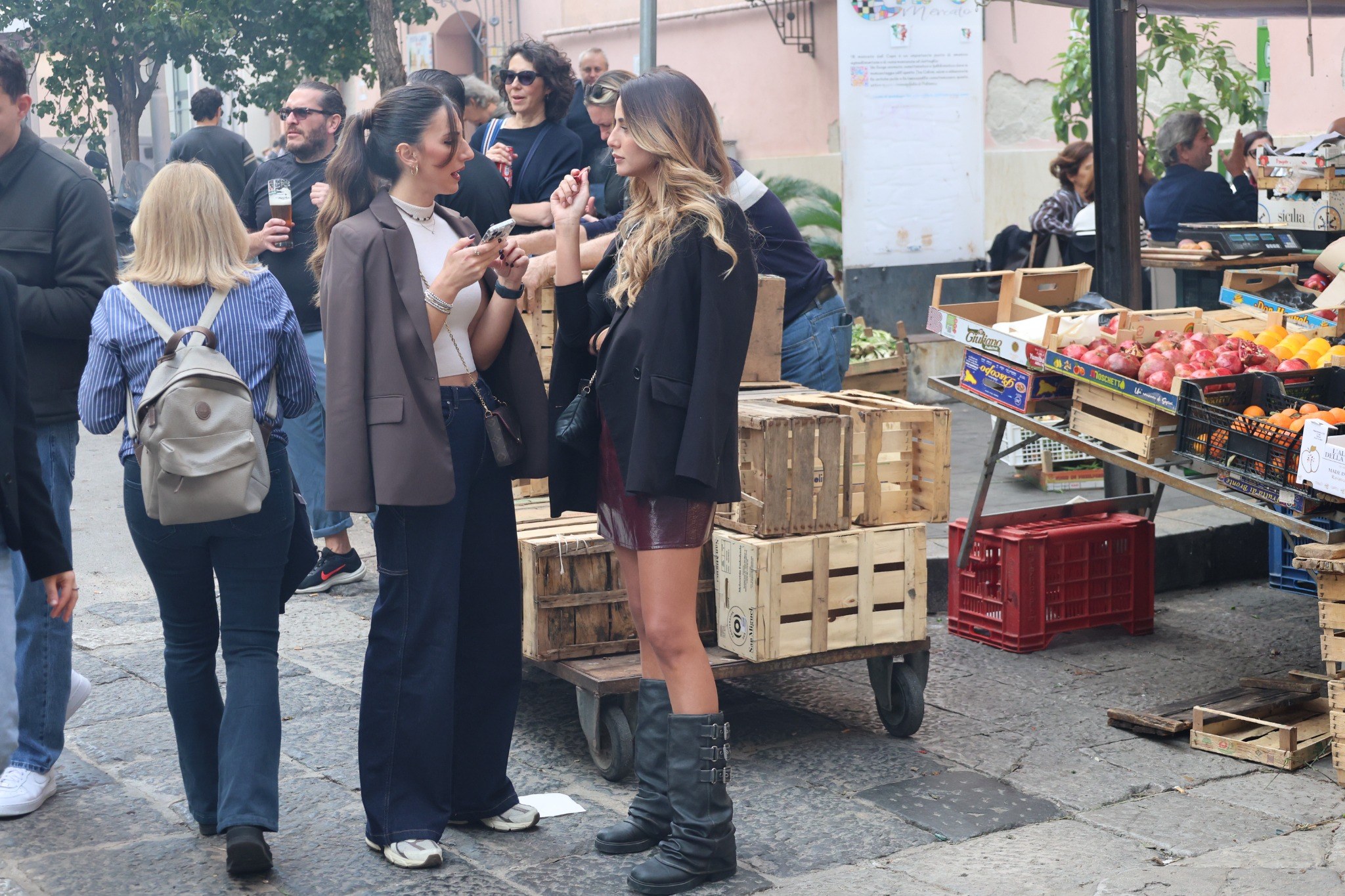
Everyone else flows around them. That's normal. A Palermo market is a street before it's a shop, and people meet, gossip and block the way. Do as they do. Stop, look, then step close to the stall when you're ready to buy.
How buying works
Don't touch, point. At most produce stalls the vendor picks for you. Point at what you want and say how much. Picking through the pile yourself is a quick way to get told off.
Ask by weight or by piece. Fruit and vegetables go by the kilo (un chilo, mezzo chilo for half). Fish, cheese and cured meat go by the etto, 100 grams (due etti, 200 grams). Citrus and artichokes are sometimes sold by the piece or the bunch.
Check the cardboard. Prices are often written on a piece of cardboard stuck into the produce. If there's no sign, ask: quanto costa?
Haggle lightly, if at all. Food prices aren't a negotiation the way they are in a souk. Buying a lot, or buying near closing time, can get you a round-down or a handful of something extra. Don't push.
Carry cash. More stalls take cards than a few years ago, but plenty don't, and a €2 purchase on a card gets you a look.
Bring a bag. You'll get plastic if you don't, but a cloth bag is easier in a crowd.
What to buy, by season
- Winter (now): blood oranges, mandarins, lemons with leaves, fennel, cauliflower (in Palermo, green cauliflower is called broccolo), wild greens, pomegranates.
- Spring: artichokes, fava beans, wild fennel, the first strawberries.
- Summer: tomatoes, eggplant, peppers, zucchini and their long pale tenerumi leaves, peaches, prickly pears, melons.
- Autumn: figs, grapes, persimmons, chestnuts, mushrooms.
- All year: capers in salt, dried oregano on the stem, almonds, pistachios, sun-dried tomatoes, ricotta (fresh in the morning).
Timing
Mornings are best, from about 8 to 11, when produce is fresh and the calls are loudest. By early afternoon many stalls are packing up. Sunday is a short day or a day off, depending on the market.
For what to eat while you're there, see Ballarò and Capo. Travel Marketing has a piece on why food markets are worth visiting wherever you travel.