Anelletti al Forno: Palermo's Baked Ring Pasta, From the Capo Market Counter to Your Oven
Ask a Palermitan for "pasta al forno" and you might get a blank look. In Palermo, baked pasta means one thing: anelletti al forno, little rings of pasta baked with meat ragù, peas and cheese into a slab you cut like cake. Some call it pasta cu furnu. Nobody would make it with penne.
It's Sunday lunch, it's the Ferragosto beach picnic in mid-August, and at Capo market it's lunch on any weekday, cut into squares from a steel tray.
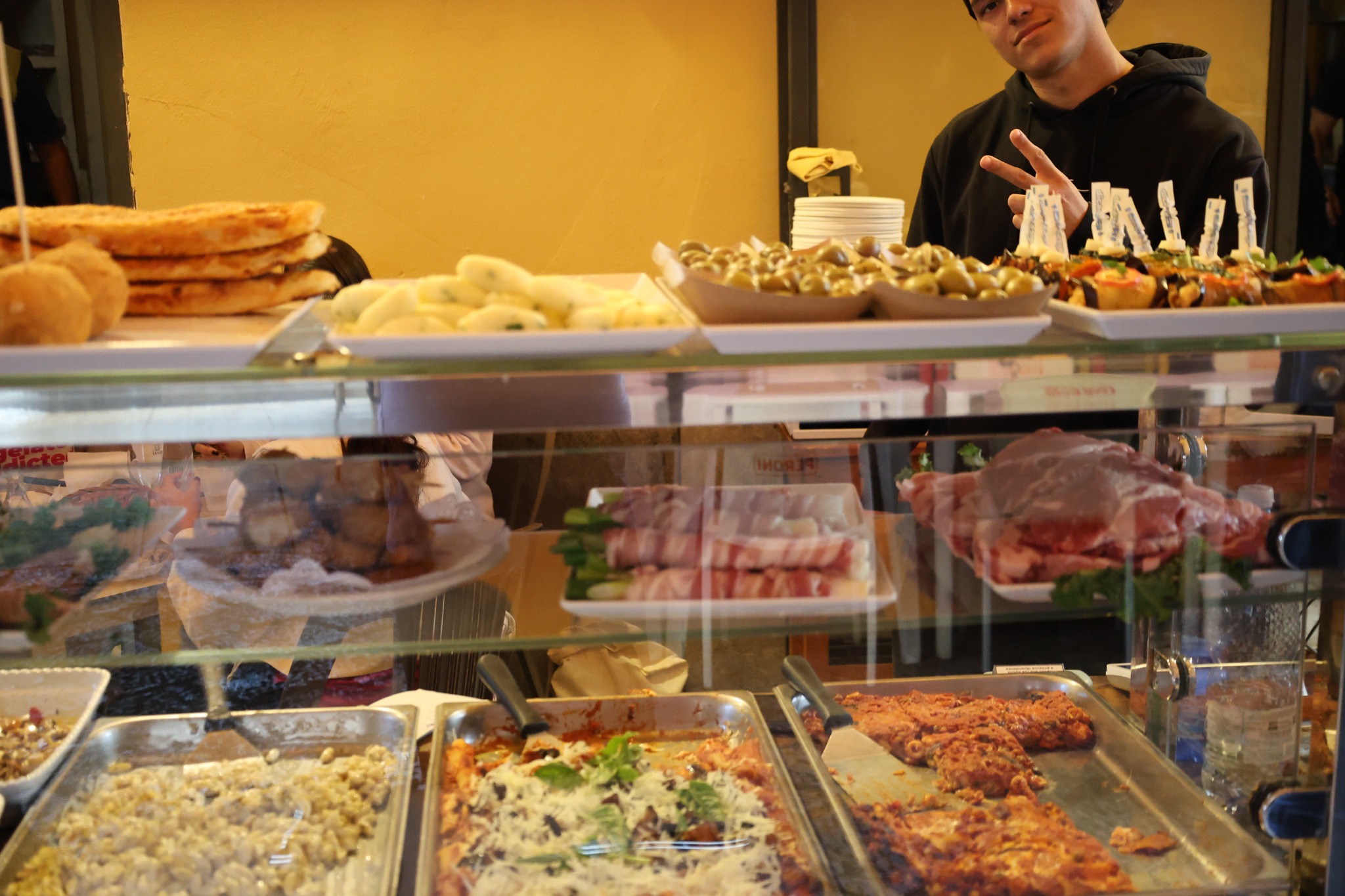
Photo: Media Gallery
On this counter the anelletti are in the tray at the bottom right, golden on top with the rings showing through the crust, a corner already cut away. Next to them, another baked pasta, topped with grated white cheese and basil. To the left, a pasta salad. Through the glass, spring onions wrapped in bacon, ready for the grill, and a big joint of raw meat. On the top shelf: two arancine, a stack of flatbreads, a plate of cheese or potato rolls flecked with parsley, a tray of green olives and small tartlets with paper flags.
Behind the counter, a young man in a black hoodie threw a peace sign at the camera.
Why rings
Anelletti are small, thin rings of durum wheat pasta. They hold their shape through boiling and then a long bake, and they pack together tightly, so the finished pasta can be turned out of a mould and sliced without falling apart. The sauce gets caught inside every ring.
Outside Sicily they can be hard to find. Ditalini or small tubetti are the nearest swap. The result is softer and won't slice as cleanly.
What goes in
The base is a meat ragù made with minced beef and pork, tomato concentrate and peas. Then the extras, which every family argues about:
- Fried eggplant, either cubed into the pasta or used to line the mould so it comes out wrapped.
- Cheese: caciocavallo in cubes, which melts in pockets; grated pecorino or parmesan on top.
- Hard-boiled eggs, sliced, in the middle layer.
- Ham or salami, in some versions.
The whole thing goes into a buttered tin dusted with breadcrumbs, bakes until the top crusts, and rests before cutting. That rest matters. Cut it hot and it slumps.
The recipe
Serves 6
For the ragù
- 300 g minced beef and 200 g minced pork
- 1 onion, 1 carrot, 1 celery stick, finely chopped
- 100 ml red wine
- 2 tablespoons tomato concentrate
- 700 g tomato passata
- 200 g peas, fresh or frozen
- Olive oil, salt, pepper, a bay leaf
For the pasta
- 500 g anelletti
- 150 g caciocavallo or provola, cubed
- 80 g grated pecorino or parmesan
- 2 hard-boiled eggs, sliced (optional)
- 1 large eggplant, cubed and fried (optional)
- Butter and breadcrumbs for the tin
- Make the ragù. Soften the onion, carrot and celery in oil. Add the meat and brown it. Pour in the wine and let it bubble off. Stir in the concentrate, then the passata, bay leaf, salt and pepper. Simmer gently for at least an hour, adding water if it gets thick. Add the peas for the last 15 minutes.
- Cook the pasta in salted water for half the time on the packet. It will finish in the oven. Drain.
- Mix the pasta with most of the ragù, half the grated cheese and the fried eggplant if using.
- Prepare the tin. Butter a 24 cm round tin or a deep baking dish and coat it with breadcrumbs.
- Layer. Half the pasta in, then the caciocavallo cubes and egg slices, then the rest of the pasta. Spread the remaining ragù on top, scatter the rest of the grated cheese and a handful of breadcrumbs.
- Bake at 190°C for 35 to 40 minutes, until the top is deep golden.
- Rest at least 15 minutes, ideally 30. Turn it out onto a plate or cut it in the tin.
It's even better cold the next day. That's why it goes to the beach.
At Capo market
Squares of anelletti cost a few euros at the rosticceria counters and are heavy enough to be a full meal. Ask for a corner if you like it crunchy. You'll find the same counters selling arancine, which are made from much the same ragù: see arancina or arancino.