Pasta in Palermo: The Dishes to Order and What Comes in Each
A Palermo menu can look familiar until you read the small print. Sardines with raisins. Cauliflower with saffron. Pasta baked in a dome. Almonds where you'd expect basil.
That's the Sicilian kitchen showing its history. Arab rule brought or spread saffron, citrus, almonds, raisins and the taste for sweet and sour. Spanish and Norman layers came later. The result is a pasta repertoire that's recognisably Italian and still nothing like Rome's.
One table, three plates
At a restaurant in Palermo, three plates arrived together, with olives and red wine.
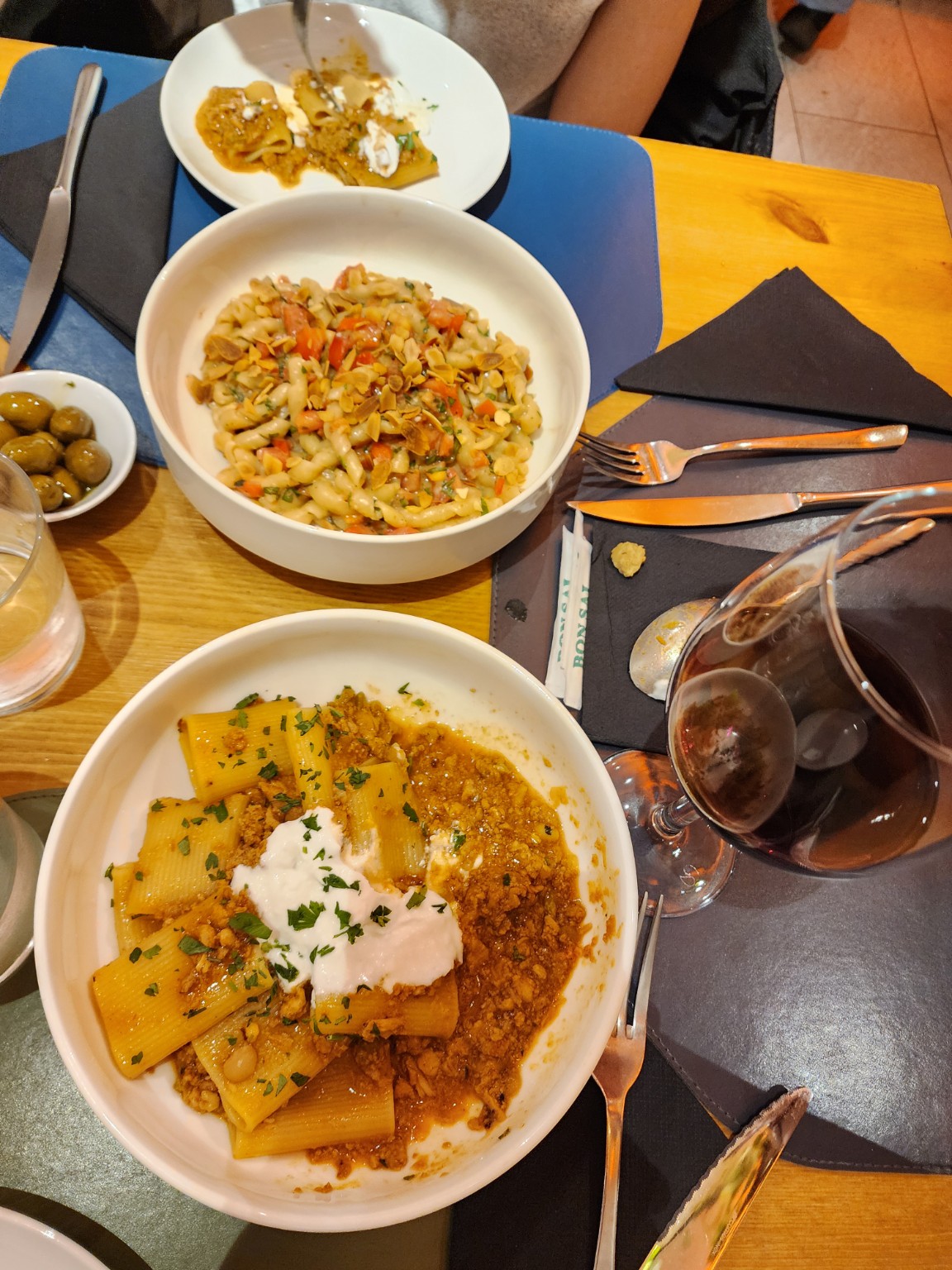
Closest to the camera, big tubes of pasta under a thick, crumbly reddish ragù, topped with a spoonful of fresh ricotta and chopped parsley. Behind it, a bowl of short twisted pasta tossed with diced tomato and herbs, scattered with toasted sliced almonds. That combination of tomato and almond points straight at the west of the island and its pesto alla trapanese. At the very back, a plate of what looks like filled pasta with more white cheese. A small dish of green olives sits on the left; a half-full glass of red on the right.
None of the dishes came with a label in the photo, and the kitchen may have had its own names for them. But they give you a fair idea of how Palermo eats pasta: generous, a little rough, with ricotta never far away.
The pasta dishes to know
Pasta con le sarde. Palermo's signature. Fresh sardines, wild fennel, onion, raisins, pine nuts and saffron, usually with bucatini, finished with muddica atturrata, breadcrumbs toasted in a pan until golden. The Palermo version is "white", with no tomato. In Catania they add tomato and often skip the saffron. Wild fennel is the flavour you'll remember.
Pasta alla Norma. From Catania, but on menus all over Sicily. Fried eggplant, tomato sauce, basil and grated ricotta salata. It's named after Norma, the opera by Vincenzo Bellini, who was born in Catania.
Busiate al pesto trapanese. Busiate are long twisted pasta from Trapani, traditionally rolled around a thin rod. The pesto is raw tomato pounded with almonds, garlic, basil and pecorino. In dialect it's pasta cu l'agghia, pasta with garlic.
Pasta con i broccoli arriminati. In Palermo "broccoli" means green cauliflower. It's cooked soft with anchovies, raisins, pine nuts and saffron, then stirred (arriminati) into the pasta and topped with toasted breadcrumbs.
Anelletti al forno. Little pasta rings baked in a mould with meat ragù, peas, cheese and sometimes fried eggplant. Sunday lunch food. Some trattorias have it on weekends only.
Pasta con il nero di seppia. Spaghetti in black cuttlefish ink. Briny and deep.
How to order
- A primo is the pasta course. In Palermo you can order a primo on its own; nobody expects you to eat four courses.
- Portions are large. Sharing a primo and then a fish plate is perfectly normal.
- Ask what's di stagione. Pasta con le sarde is best in spring and early summer, when wild fennel is fresh.
- Grated cheese on seafood pasta is still frowned on. Toasted breadcrumbs are the Sicilian answer: ask for muddica if it's not already there.
- In the city centre, a full dinner with a starter, a fish primo, a main and dessert ran about €22 to €38 a person in mid-2026 listings, before wine.
For more on this dinner and the pastries that followed, see Travel Marketing's piece on Palermo pasta and strawberry pastries. The pastry half gets its own post here: what to order at a Sicilian pasticceria.