Cassata Siciliana: Ricotta, Marzipan and Candied Fruit
A whole cassata in a Sicilian pastry shop has something of the grandeur of a wedding cake, even when there is no wedding in sight. Beneath the elaborate decoration is a combination familiar to anyone who has eaten a good cannolo: sweetened sheep's milk ricotta, often dotted with little pieces of dark chocolate. With cassata, however, the pastry chef has an entire cake on which to work. Almond paste, sponge cake, sugar icing and candied fruit turn a fairly simple dairy filling into a dessert made for the middle of a crowded table.
Look at the two cassate in this photograph. Their smooth white icing runs down gently sloping sides, with pale green sections visible underneath. Translucent orange-colored candied fruit, green pieces and bright red cherries are arranged across the tops. The cakes sit on round gold boards in a stainless steel display case, behind a strawberry cake edged with chopped pistachios and a fresh fruit cake covered with sliced strawberries, kiwi and yellow fruit. Two golden ring-shaped pastries, studded with cherries and dark pieces of filling, complete the display. The cassate hold their own even among all that color.
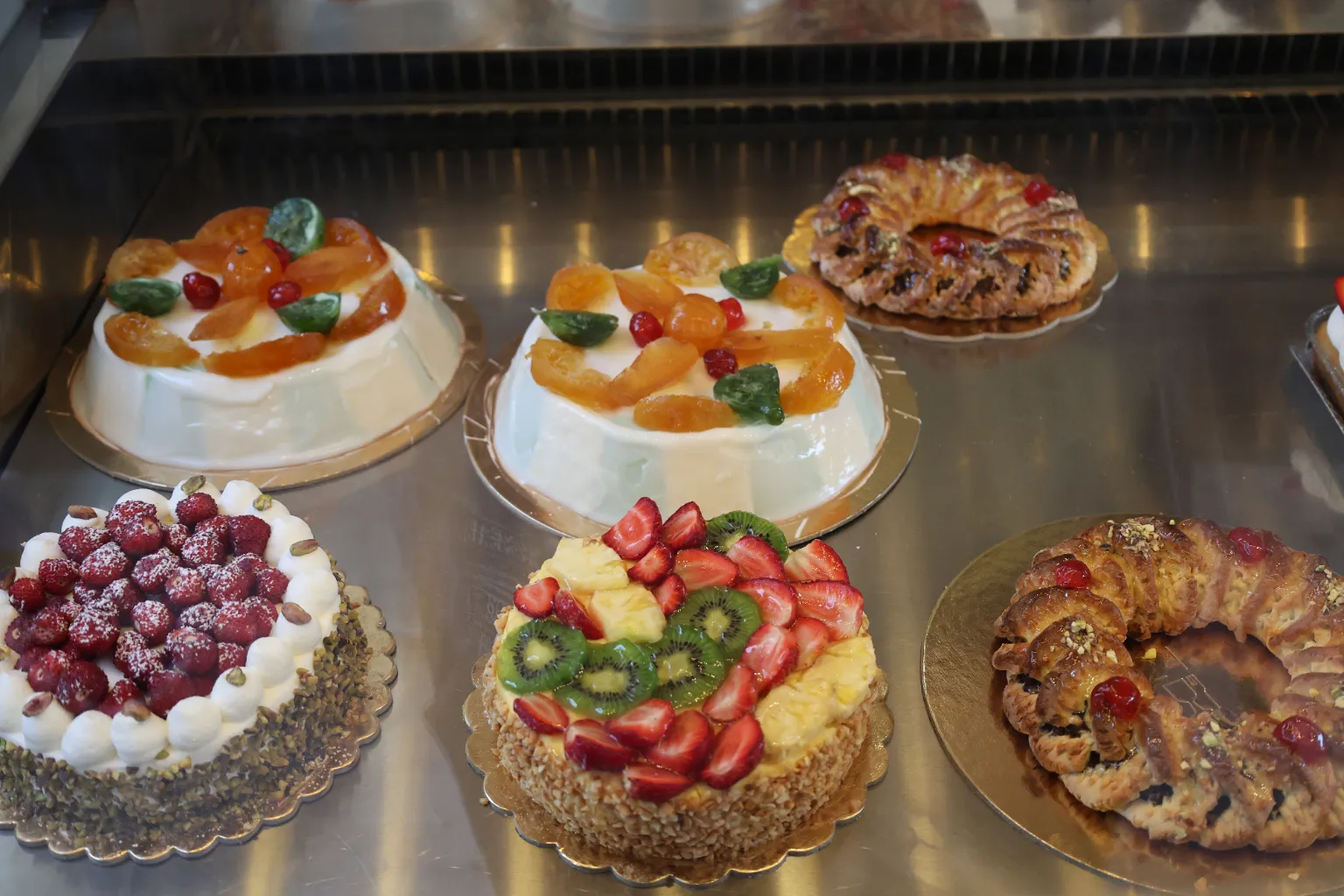
Photo: Media Gallery
What goes into a cassata
The traditional glazed cassata is assembled in a shallow round mold with sloping sides. Pieces of pan di Spagna (sponge cake) and pasta reale, a sweet almond paste often tinted green, line the mold. Sheep's milk ricotta is drained, sweetened and worked until smooth, then spread inside with chocolate pieces. More sponge closes the cake. Once chilled, the whole thing is turned out, covered with sugar icing and decorated with candied citrus peel, cherries and sometimes long strips of zuccata, the candied flesh of a type of gourd.
The ricotta is the part worth paying attention to. It should taste fresh and milky, with the chocolate and almond bringing their own flavors. The icing and candied fruit are intensely sweet, so a modest slice is quite enough. An unsweetened espresso is a very good companion.
From Easter to the pastry counter
Cassata carries several centuries of Sicilian food history. Sugar cultivation and confectionery developed under Arab rule, while almond sweets became closely associated with Palermo's convents. The name itself has no settled explanation: the Arabic word for a bowl and a Latin word for cheese have both been proposed.
An ecclesiastical record from Mazara del Vallo in 1575 connects cassata with Easter, but the dessert of that period was probably rather different from the cake in the photograph. A Sicilian dictionary published in 1853 still described the baked form as the usual cassata. The ornate glazed version became established in the later nineteenth century, with Palermo's confectioners making increasingly elaborate use of preserved fruit and sugar decoration.
Easter remains its traditional occasion, although today cassata is sold throughout the year and also appears at Christmas lunches and other family celebrations. A whole cake brought to the table makes sense when there are plenty of people to share it.
Which cassata to order
In Palermo, ask for cassata siciliana or cassata tradizionale if you want the decorated cake. Cassata al forno is a different experience: sweet ricotta enclosed in baked shortcrust pastry, sometimes finished with powdered sugar. Its relatively plain appearance conceals much the same pleasure of eating good ricotta. A cassatina, the individual-sized version of the glazed cake, is a sensible purchase if you are exploring the city alone.
Whole cassate are commonly sold by weight. In November 2026, online menus in Palermo listed a one-kilogram cassata at €19 at Antica Pasticceria del Biondo and €22 at Pasticceria Cappello, while Bar Olimpia advertised larger or differently packaged cakes at prices ranging from €37.90 to €64. These are examples from specific shops rather than a fixed citywide price. Ask how many portions a cake yields and keep it refrigerated until serving.
Traditional Sicilian cassata recipe
Makes one 23 cm cake, serving 10 to 12. Allow about 90 minutes of hands-on work, plus baking, overnight draining of the ricotta and chilling. A shallow cake tin with sloping sides is ideal, but an ordinary round tin works too.
Ingredients
- Sponge cake: 6 eggs at room temperature, 150 g caster sugar, 150 g plain flour, grated zest of 1 lemon, butter and flour for the tin.
- Filling: 1 kg well-drained sheep's milk ricotta (weighed after draining), 220 g caster sugar, 100 g chopped dark chocolate and, optionally, 50 g finely diced candied citron or orange peel.
- Almond paste: 300 g marzipan and a little green food coloring.
- Syrup: 100 ml water, 40 g sugar and 2 tablespoons of Marsala or maraschino liqueur (optional).
- Glaze and decoration: 300 g icing sugar, 1 tablespoon lemon juice, water as needed, and 200 to 300 g assorted candied fruit.
Preparation
- Leave the ricotta in a covered sieve over a bowl in the refrigerator overnight to remove excess whey. Press it through a fine sieve, stir in the sugar until smooth, then fold in the chocolate and optional diced candied peel. Refrigerate.
- Heat the oven to 180°C (350°F). Grease and flour a 23 cm tin. Whip the eggs, sugar and lemon zest until pale and thick enough to leave a ribbon on the surface. Gently fold in the sifted flour. Bake for 25 to 30 minutes, until a skewer comes out clean. Cool completely.
- Bring the syrup water and sugar to a simmer until dissolved. Cool before adding the liqueur, if using.
- Tint the marzipan pale green and roll it about 4 mm thick on a surface dusted with icing sugar. Slice the sponge horizontally into layers about 1 cm thick. Line the cassata mold with cling film. Cut alternating pieces of sponge and marzipan to fit around its inner wall. Cover the bottom with a layer of sponge, trimming it to fit.
- Brush the exposed sponge lightly with syrup. Spoon in the ricotta filling, smooth it out and close the mold with another sponge layer. Brush this layer with syrup, cover and refrigerate for at least four hours, preferably overnight.
- Invert the chilled cake onto a serving plate and peel away the film. Mix the icing sugar with lemon juice, adding water a teaspoon at a time until the glaze is thick but spreadable. Cover the top and, for the white-glazed finish in the photograph, spread a thin coat over the sides too.
- Arrange candied cherries, orange peel and green candied fruit over the glaze while it is still tacky. Chill for another two hours before slicing.
Keep the finished cassata covered in the refrigerator at 4°C or below and eat within two days. Use fresh, pasteurized ricotta. If sheep's milk ricotta is unavailable, well-drained whole-milk cow's ricotta will work, though the flavor will be milder.
For more on the city's convents, markets and pastry traditions, see the Palermo guide on Virtual Travel Guide.