Sicilian Pastry Shops: What to Order at the Pasticceria Counter
Walk into a pasticceria in Palermo and the counter is a wall of choice. Cannoli in a row, cassatine under glass, marzipan fruit painted to look real, trays of almond biscuits, cream puffs, tarts, brioche. Behind you there's a queue. In front of you there's a woman who wants to know what you'll have.
Here's how to choose, and how to pay without holding up the line.
Strawberries and cream, on paper
At one Palermo pastry bar, three pieces came out on a sheet of white paper, with a fork.
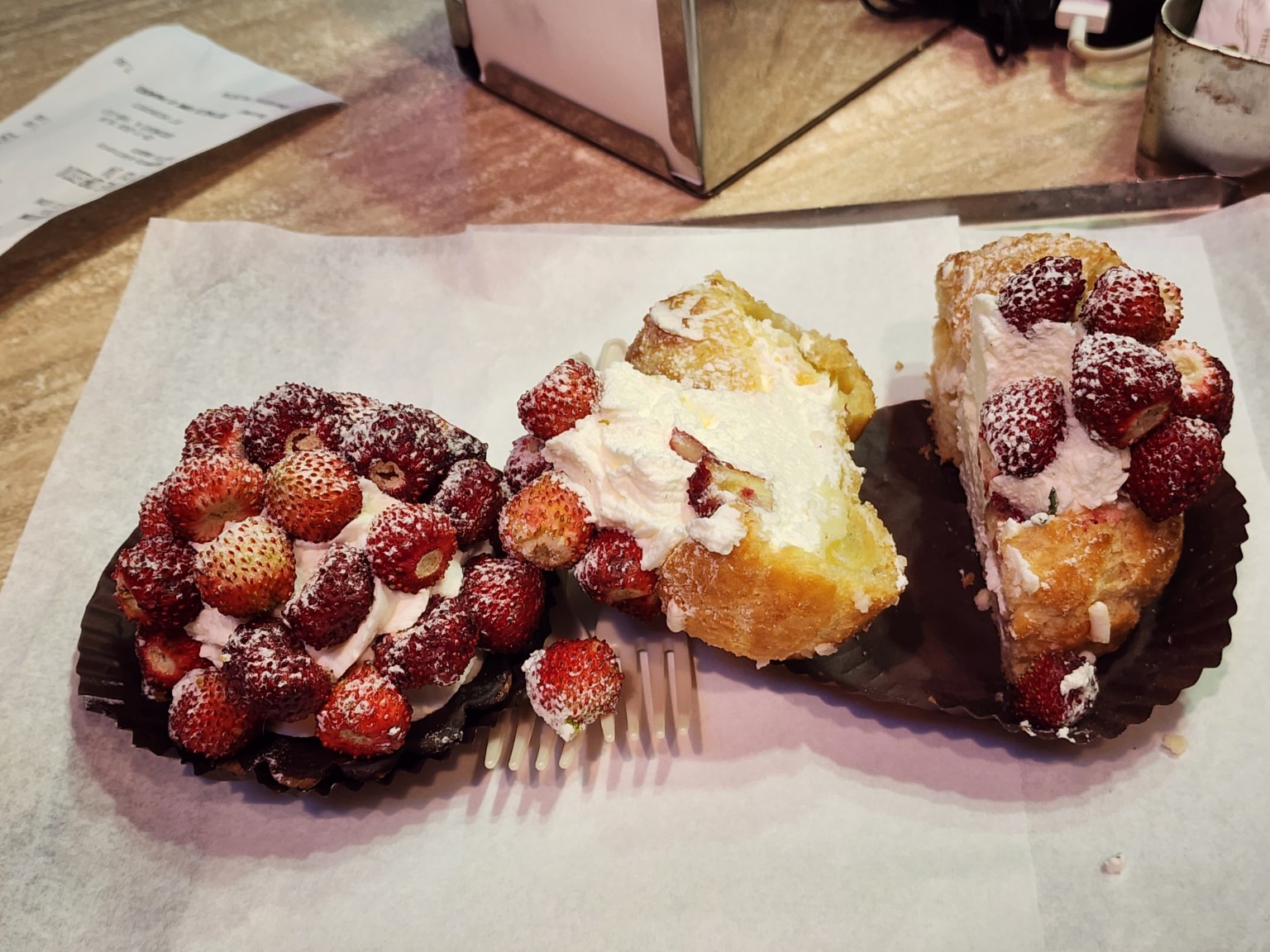
On the left, a small tart buried under tiny strawberries, the size Italians call fragoline, over whipped cream. In the middle, a choux pastry split open and filled with cream, more strawberries around it. On the right, a slice of a bigger cream pastry, pink cream and strawberries piled on top. All of it dusted with powdered sugar. Behind them, a steel napkin holder and a receipt.
You won't find these in a list of famous Sicilian sweets. They're the everyday kind, what a bar sells to people who drop in after lunch. Worth knowing both.
The classics to look for
Cannolo. A fried pastry tube filled with sweetened sheep's milk ricotta, sometimes with chocolate chips, candied orange or pistachio at the ends. The rule every Palermitan will tell you: it should be filled to order. If the shells are sitting pre-filled in the window, the pastry has gone soft. As of 2026, a full-size cannolo at a well-known pasticceria costs about €3 to €5 at the counter. Sitting down can double it.
Cassata and cassatine. Sponge cake, ricotta cream and marzipan, glazed and decorated with candied fruit. The cassatina is the single-serving size.
Iris. A Palermo speciality: a ball of brioche dough filled with ricotta cream (sometimes chocolate), breaded and fried, or baked in a lighter version. Breakfast or mid-morning.
Frutta martorana. Marzipan shaped and painted to look like fruit. Legend credits the nuns of the Martorana convent, who decorated their bare orchard with marzipan fruit for a visiting churchman. It's sold all year in some shops but is at its peak around All Saints and the Day of the Dead in early November.
Minne di Sant'Agata. A Catania speciality you'll also see in Palermo: small domed cakes of sponge and ricotta under white icing with a candied cherry on top. Look for them around Saint Agatha's feast in early February.
Convent sweets. Several Palermo shops still make the old recipes once sold by convents, from almond-paste shells to pistachio cakes. Prices are often modest, a euro or two a piece.
How to order and pay
- In busy bars, pay first. Go to the cash desk (cassa), say what you want, pay, and take the receipt (scontrino) to the counter. Smaller shops just serve you and take money at the end.
- Stand or sit. Eating at the counter is cheaper. Table service costs more, sometimes a lot more.
- Point and use numbers. Un cannolo, due cassatine. The staff are used to it.
- For takeaway, ask for a tray. Pastries go on a gold card tray, wrapped in paper and tied with ribbon. It's how you bring dessert to someone's house.
- Coffee goes with it. An espresso at the bar is the normal partner. The rules for that are on Espresso Cortado.
For a broader look at Sicily's desserts, see Peppers. The pasta that came before these pastries is in pasta in Palermo.