I Segreti del Chiostro: Cannoli From the Nuns' Recipes in Palermo's Santa Caterina Monastery
For seven centuries, the nuns of Santa Caterina made sweets they never sold over a counter. They lived in enclosure, behind the walls of a monastery that fills a whole block of old Palermo, and passed cakes and biscuits out through a revolving wooden wheel. Today the same rooms hold a pastry shop, and the most famous thing it sells is a cannolo filled while you wait.
The shop is called I Segreti del Chiostro, the secrets of the cloister. It sits inside the monastery of Santa Caterina d'Alessandria, on Piazza Bellini, a few steps from the Fontana Pretoria. You buy your pastry at the counter, then carry it out into the cloister to eat it by the fountain.
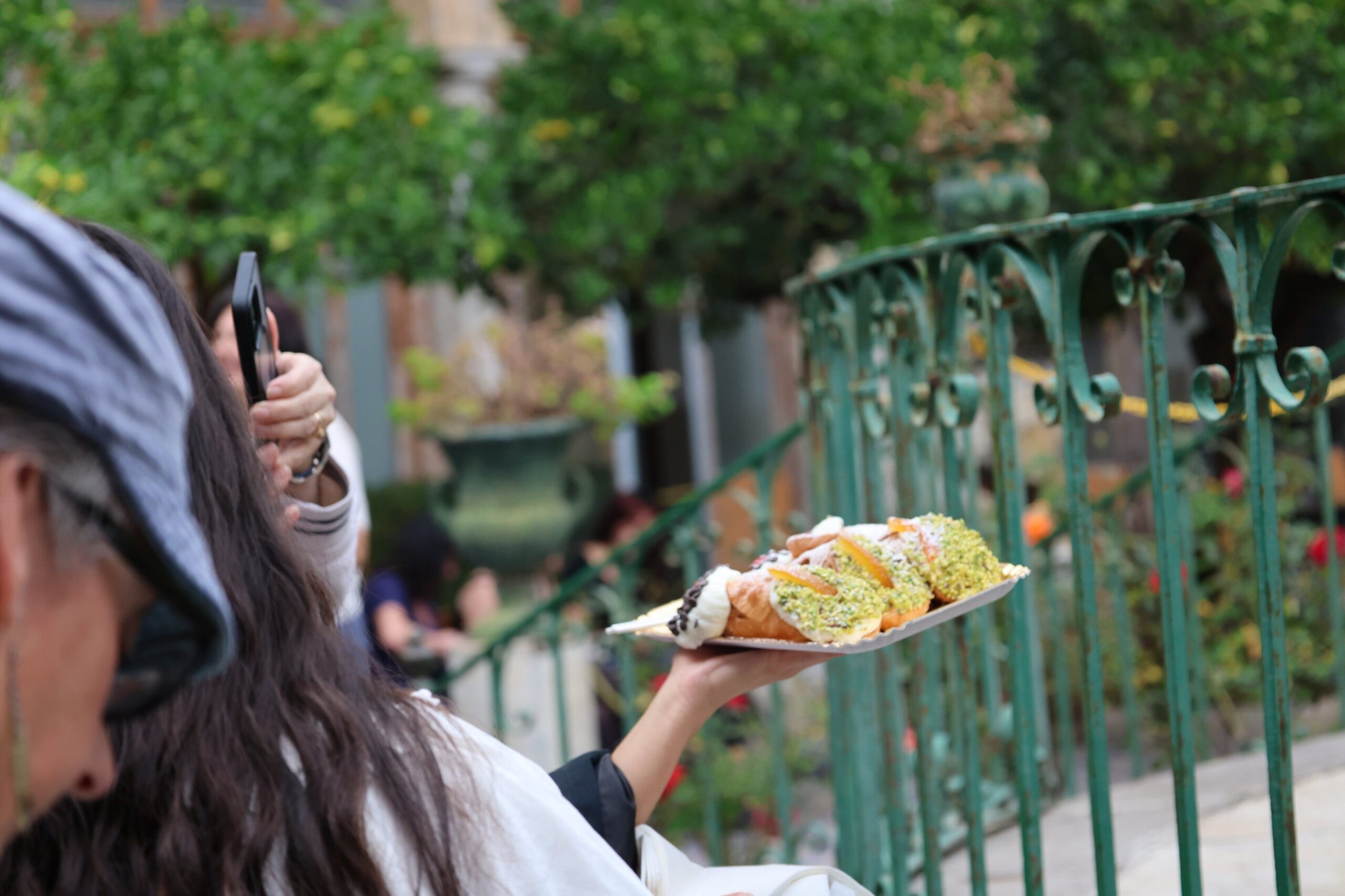
Photo: Media Gallery
That's what the visitor in this photo is doing. She holds a gold card tray up at arm's length and someone behind her has a phone out. On the tray, five cannoli: four with their ends dipped in chopped pistachio and topped with a slice of candied orange, one with chocolate chips pressed into the ricotta. Powdered sugar over everything. Behind her, the green iron railings of the cloister fountain and a blur of roses.
Who kept the recipes
Dominican nuns lived in Santa Caterina from 1311 until 2014, when the last of them left. The monastery opened to the public as a museum in 2017.
Palermo once had more than twenty enclosed convents, and many of them made sweets. Each had its specialities, and the recipes were passed on by memory. Historian Maria Oliveri spent years collecting them, interviewing the last nuns still alive, and gathered them in a book called I segreti del chiostro. The pastry shop grew out of that work. It's part of the project to bring the monastery back into use, and it bakes from those old convent recipes.
The wheel is still there. Nuns used it to pass sweets out to the world without being seen, and it was also where abandoned babies were left.
What's on the counter
The shop is one long room with a painted panel on the front of the counter. Two staff in navy caps work behind the glass.
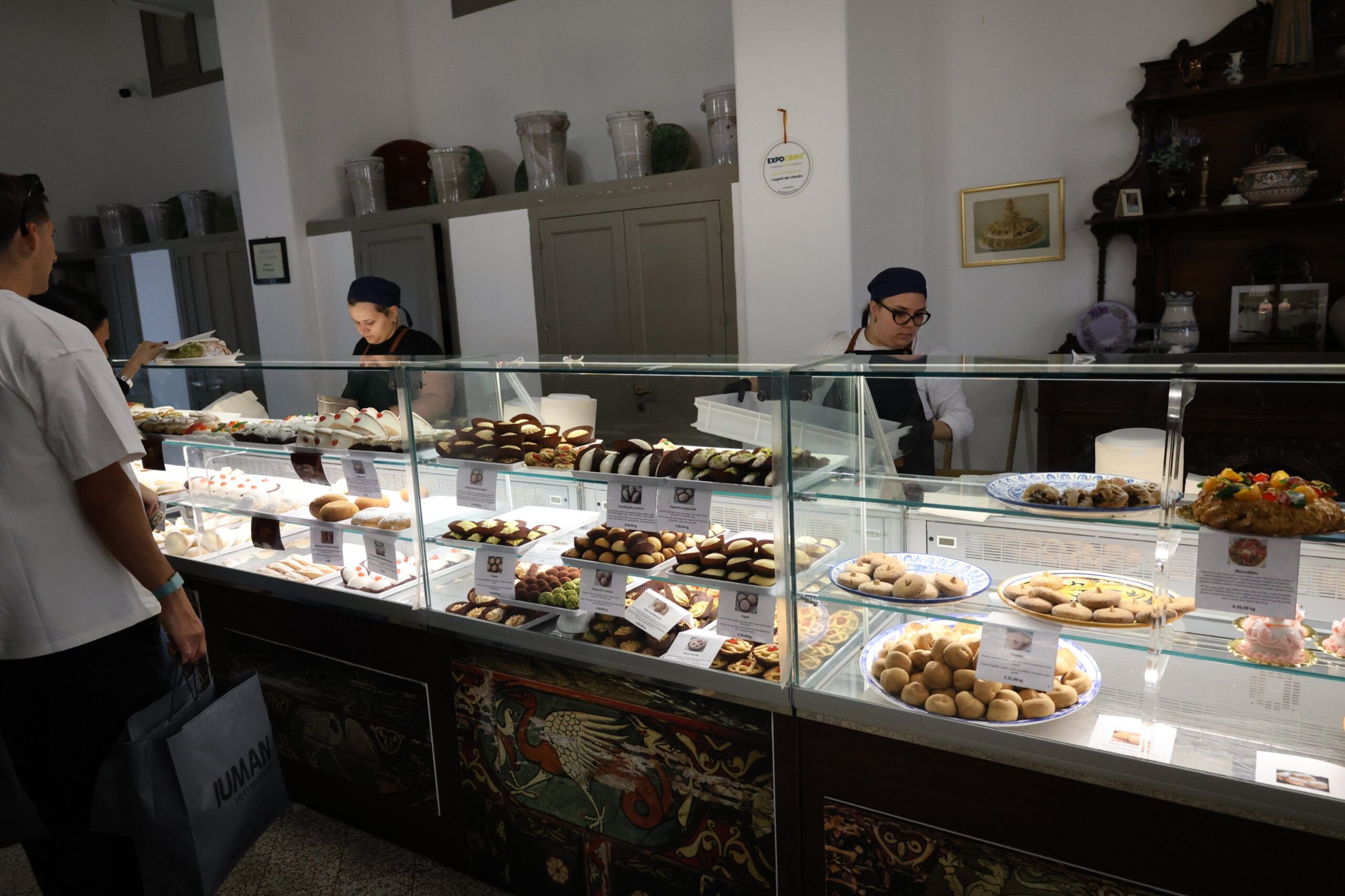
Photo: Media Gallery
Each tray has a printed card with a photo, a description and a price. Along the top shelf: white-iced cassatine, chocolate pastries, a row of cannoli. Lower down: almond biscuits in paper cases and chocolate-and-pistachio sweets.
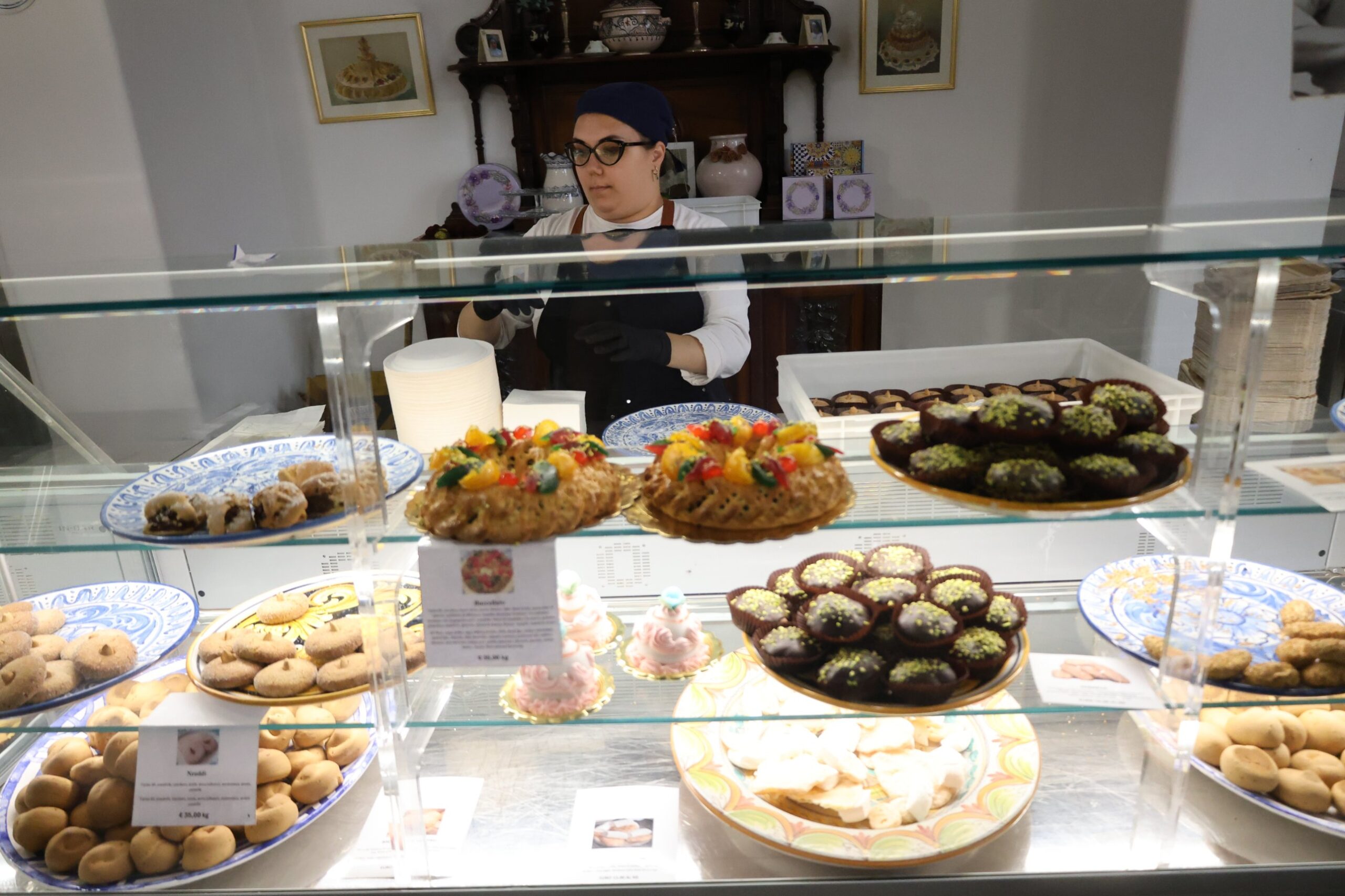
Photo: Media Gallery
In November the buccellato was already out: two rings of the Christmas fig cake, sold by weight at €36 a kilo. More on that one in our buccellato post.
Things to look for:
- Cannoli, filled to order. Pistachio or chocolate chip ends.
- Trionfo di gola, the "triumph of gluttony", a layered convent cake made famous by The Leopard.
- Panino di Santa Caterina, the house sweet: a soft pastry filled with candied squash and almonds, with lemon zest.
- Almond biscuits and small convent sweets sold by the kilo.
- Seasonal cakes: buccellato at Christmas, the marzipan Easter lamb in spring.
Small sweets are priced by weight or by the piece. A cannolo costs a few euros as of 2026.
Eating it in the cloister
The cloister is the reason to come here rather than any other pastry shop. A square garden with tiled paths, rose bushes, citrus trees and old green urns, around a fountain topped by a statue of Saint Dominic. The building above is all peeling ochre plaster, iron balconies and shutters.
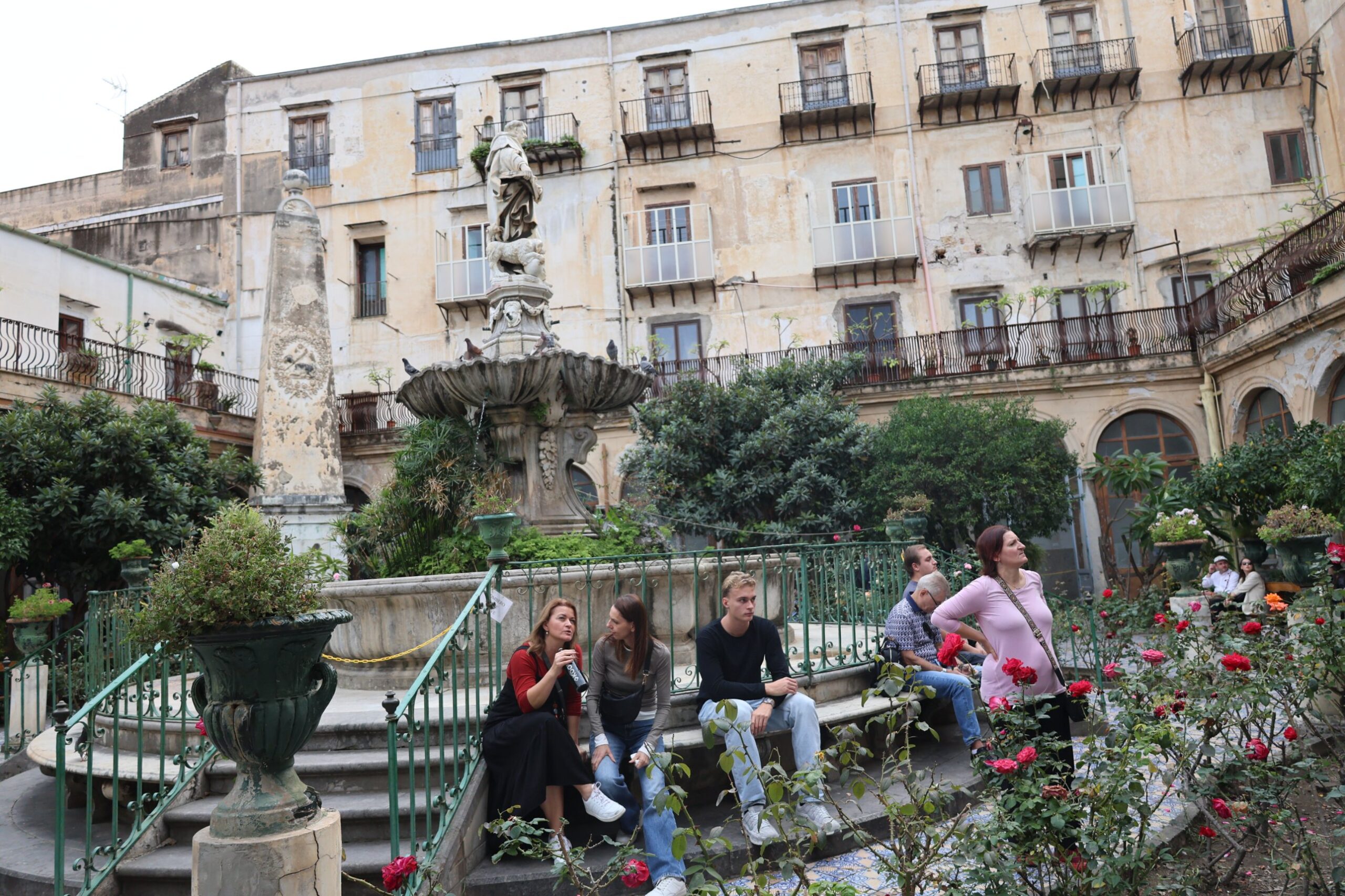
Photo: Media Gallery
People sit on the stone bench around the fountain basin with their pastries and coffee. Nobody hurries.
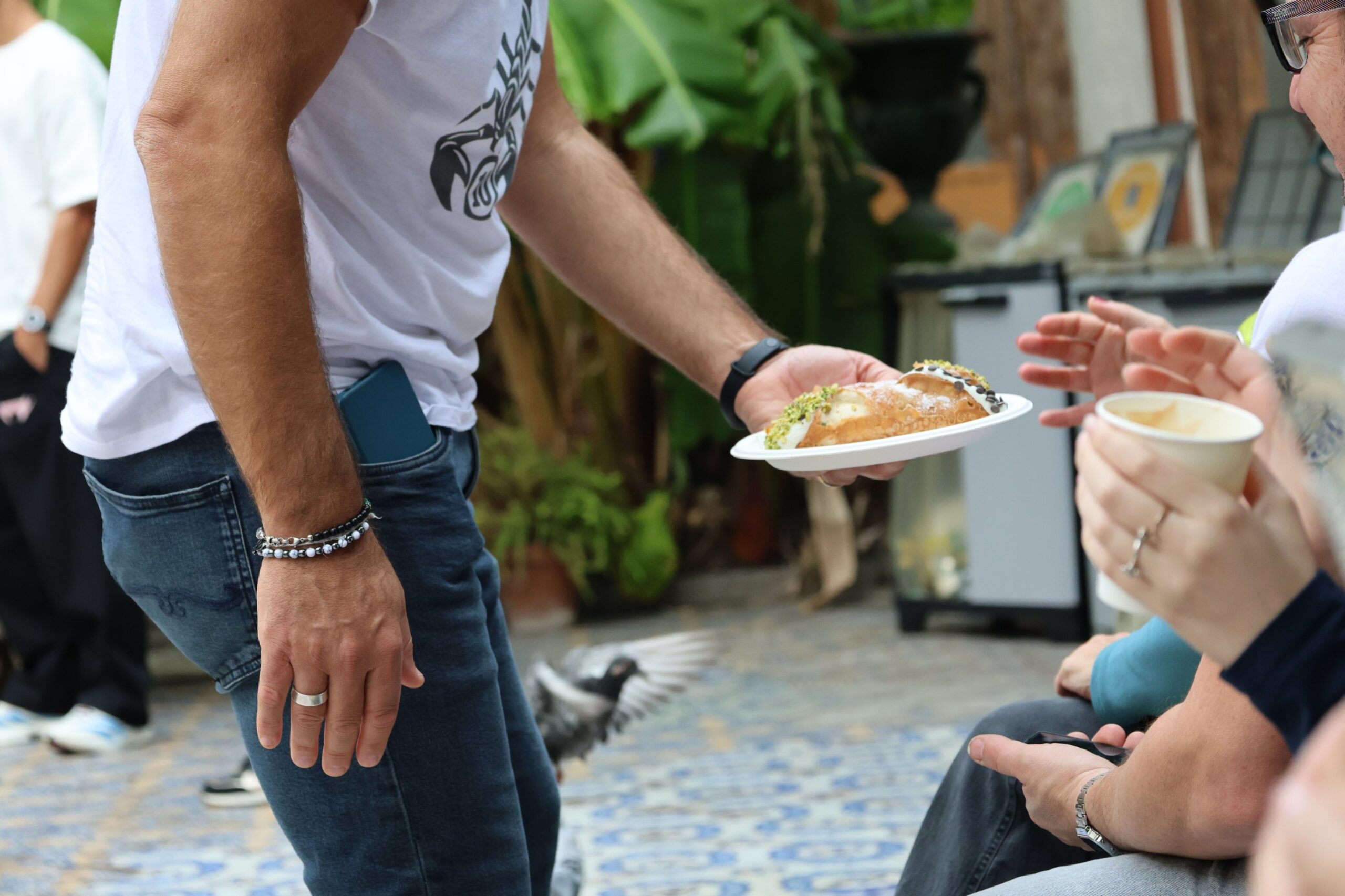
Photo: Media Gallery
A pigeon works the tiled floor for crumbs while the cannolo gets handed round.
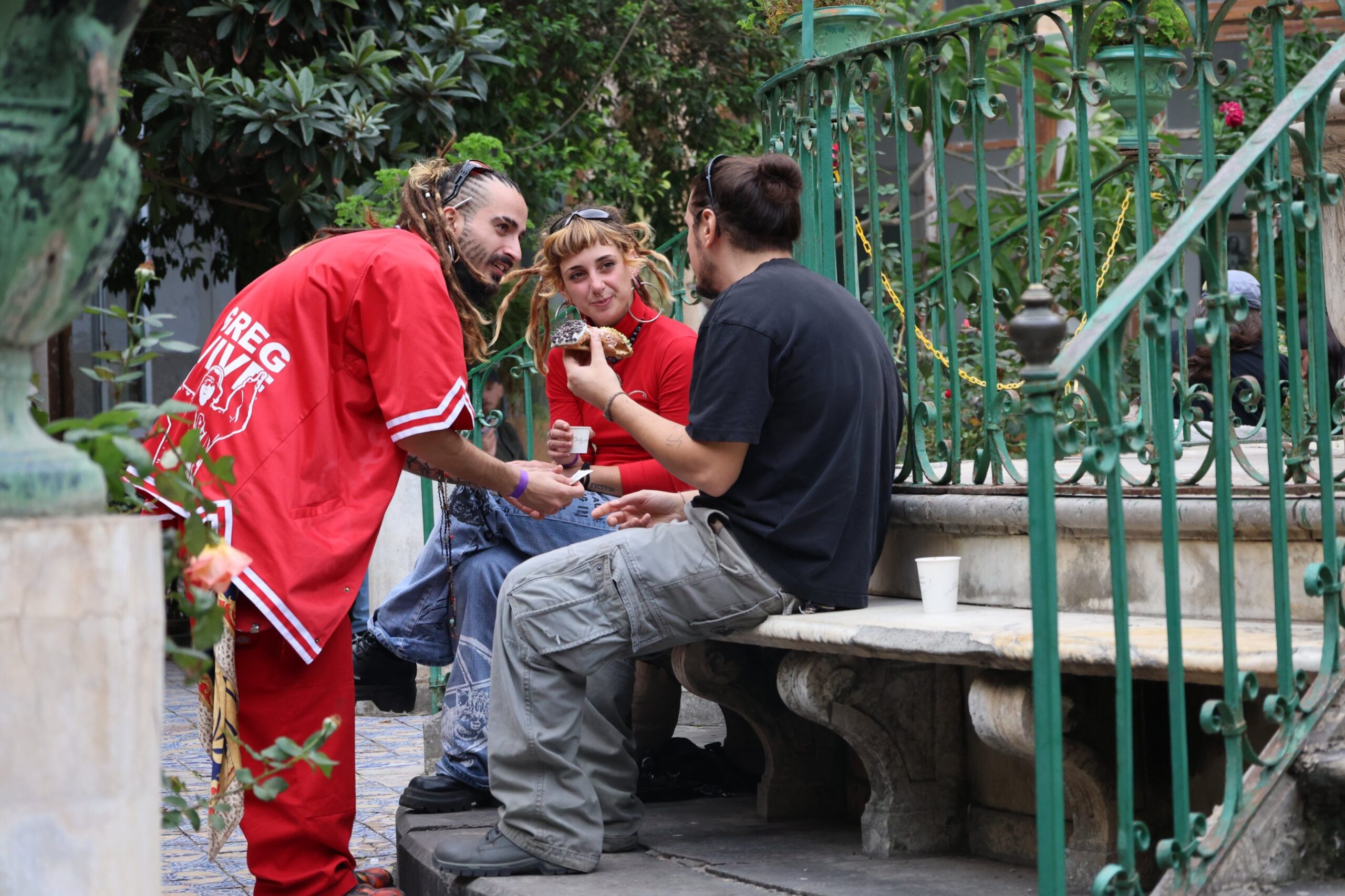
Photo: Media Gallery
Three friends here have one cannolo between them and two small cups of coffee. They pass it back and forth. That's about as good as a Palermo morning gets.
Visiting
- Where: Piazza Bellini 1, in the Kalsa, next to Piazza Pretoria.
- When: the monastery is open every day from 10:00 to 18:00, last entry 17:15.
- The museum and rooftops: a separate visit, with the ticket office on the first floor, entered from Via Discesa dei Giudici 33. The rooftop terraces look down on Piazza Pretoria and its fountain.
- Go early. By late morning the queue at the counter can run out the door, and the best cannoli go first.
For more about cannoli, and how to make them at home, see Sicilian cannoli. For the rest of the pastry counter, see what to order at a Sicilian pasticceria. Virtual Travel Guide covers the square outside in its Piazza Pretoria photo story.