Lunch at I Pastari in Palermo
Three bowls of pasta on a black table at I Pastari, photographed on November 8, 2026, make a rather good introduction to the range of Italian cooking available in Palermo. The restaurant at Via Roma 218 specializes in fresh pasta and pizza. Its kitchen is open to view, and the pasta is made in-house. There is a Sicilian accent to much of the menu, although the cooks happily borrow from other parts of Italy.
The table is particularly photogenic. In the large, pale ceramic bowl on the left, little gnocchi sit in a pool of ivory-colored cheese sauce, dotted with tiny black seeds and a spoonful of dark truffle cream. At the top right, a mound of wide golden pasta ribbons is mixed with pink prawns and pieces of red tomato beneath a finely grated topping. The third bowl, in the foreground, contains thick strands of pasta in a red tomato sauce, with browned pieces of cured pork and grated cheese. Two of the bowls have elaborate blue-and-white floral patterns, each quite different from the other. Mustard-colored paper placemats, a bottle of mineral water and a small I Pastari card carrying the menu's QR code complete the scene.
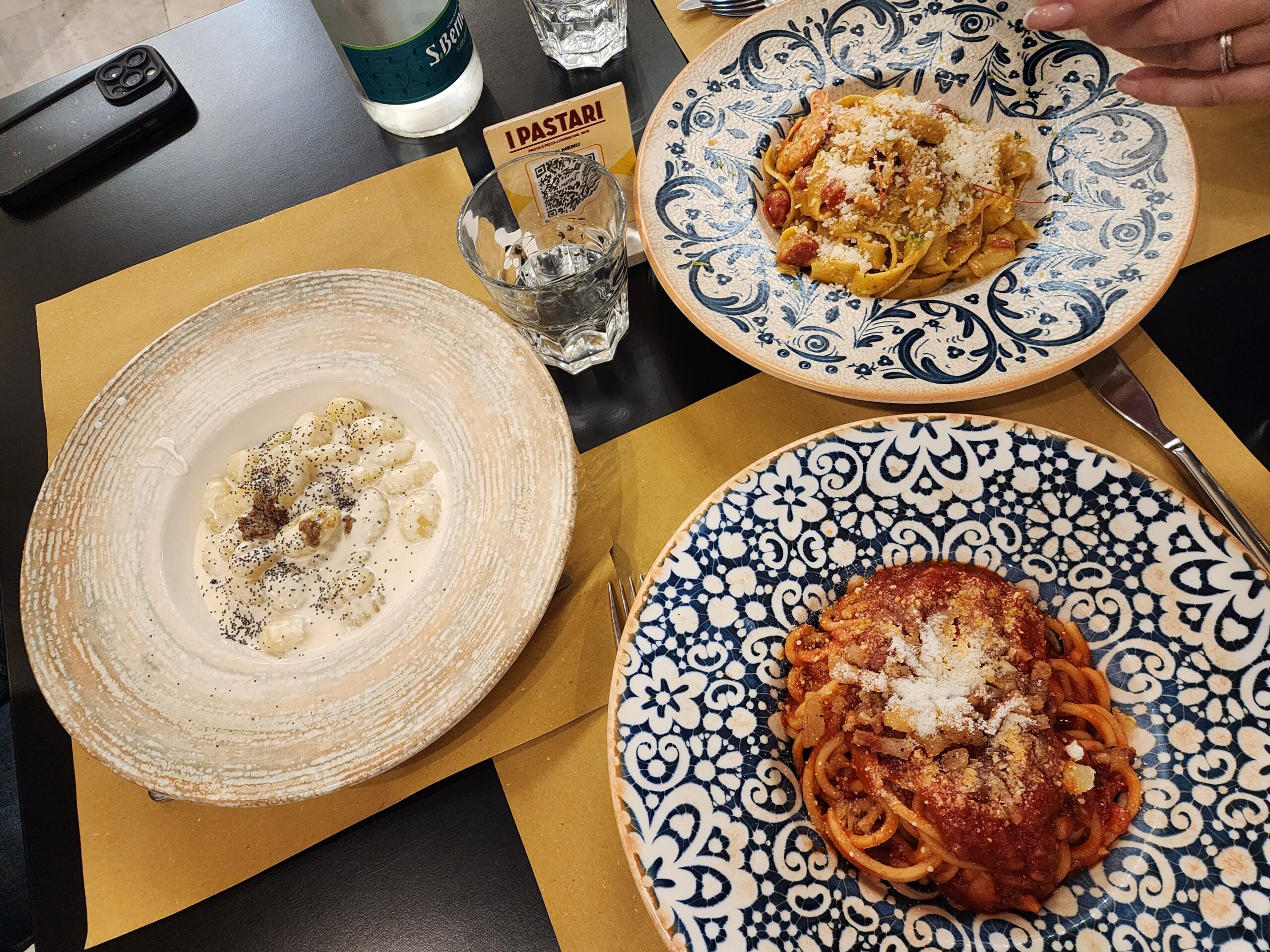
Photo: Peppers
Gnocchi with four cheeses and truffle
The creamy dish on the left closely matches the restaurant's gnocco ai quattro formaggi. Its sauce combines Gorgonzola, Emmental, smoked scamorza and Grana Padano with cream. A touch of truffle cream and a scattering of poppy seeds finish the dish. The dark little seeds are especially noticeable against the pale sauce in the photograph.
Each cheese has a job to do. Gorgonzola brings the sharpness of blue cheese, while Emmental and scamorza melt into the sauce. Grana Padano gives it a more savory finish. The soft dumplings are a natural partner for such a rich sauce; there is plenty of surface for the cheese to cling to.
Two plates with very different sauces
The golden ribbons across the table appear to correspond to the menu's fettuccine with prawns, pistachio and lime. It is a combination with a strong Sicilian identity. The restaurant uses pink prawns from Mazara del Vallo and dresses the pasta with a pistachio pesto, cherry tomatoes, garlic-infused oil and lime zest. Broad fettuccine are particularly well suited to a sauce like this, which can gather in the folds of the pasta.
The red pasta in the foreground looks like the spaghetti all'amatriciana on the same menu, with tomato, guanciale (cured pork jowl) and pecorino. Amatriciana comes from Amatrice in central Italy, and its presence at a Palermo restaurant illustrates how readily Italian regional recipes travel within the country. Those little browned pieces of pork have quite a different role from the prawns in the other bowl. Their rendered fat gives the tomato sauce much of its depth.
The exact orders for the two long-pasta dishes are inferred from their appearance and the restaurant's menu, but the contrast between the three plates is unmistakable.
What lunch costs at I Pastari
As of November 24, 2026, the digital menu lists the four-cheese gnocchi at €13, the prawn and pistachio fettuccine at €16 and spaghetti all'amatriciana at €11. The coperto, or table charge, is €2 per diner. These are current menu prices rather than a record of the original meal's bill.
There are less elaborate choices, too. Pasta alla Norma with eggplant and salted ricotta is listed at €9, and a Sicilian version of carbonara made with local pecorino and guanciale from Nebrodi black pigs costs €11. That last dish is a nice example of how the kitchen brings the island's own ingredients into a recipe associated with Rome.
For another look at Palermo's dining traditions, see lunch at Ferro di Cavallo, where the food arrives on plain white plates over paper menus. Both tables are worth a place in a food lover's visit to the city.