Sarde a Beccafico: Palermo's Stuffed Sardines and the Bird They Were Named After
Sardines are about the cheapest fish in a Sicilian market. Sarde a beccafico turns them into something that looks like a feast: each one opened flat, filled with breadcrumbs, pine nuts and raisins, rolled up with its tail in the air, and baked with bay leaves and orange.
The name tells the story. The beccafico is a small songbird that gorges on ripe figs in late summer and gets plump on them. Sicilian nobles hunted it and ate it stuffed. People who couldn't afford game birds, or the hunt, made their own version from sardines, and kept the name.
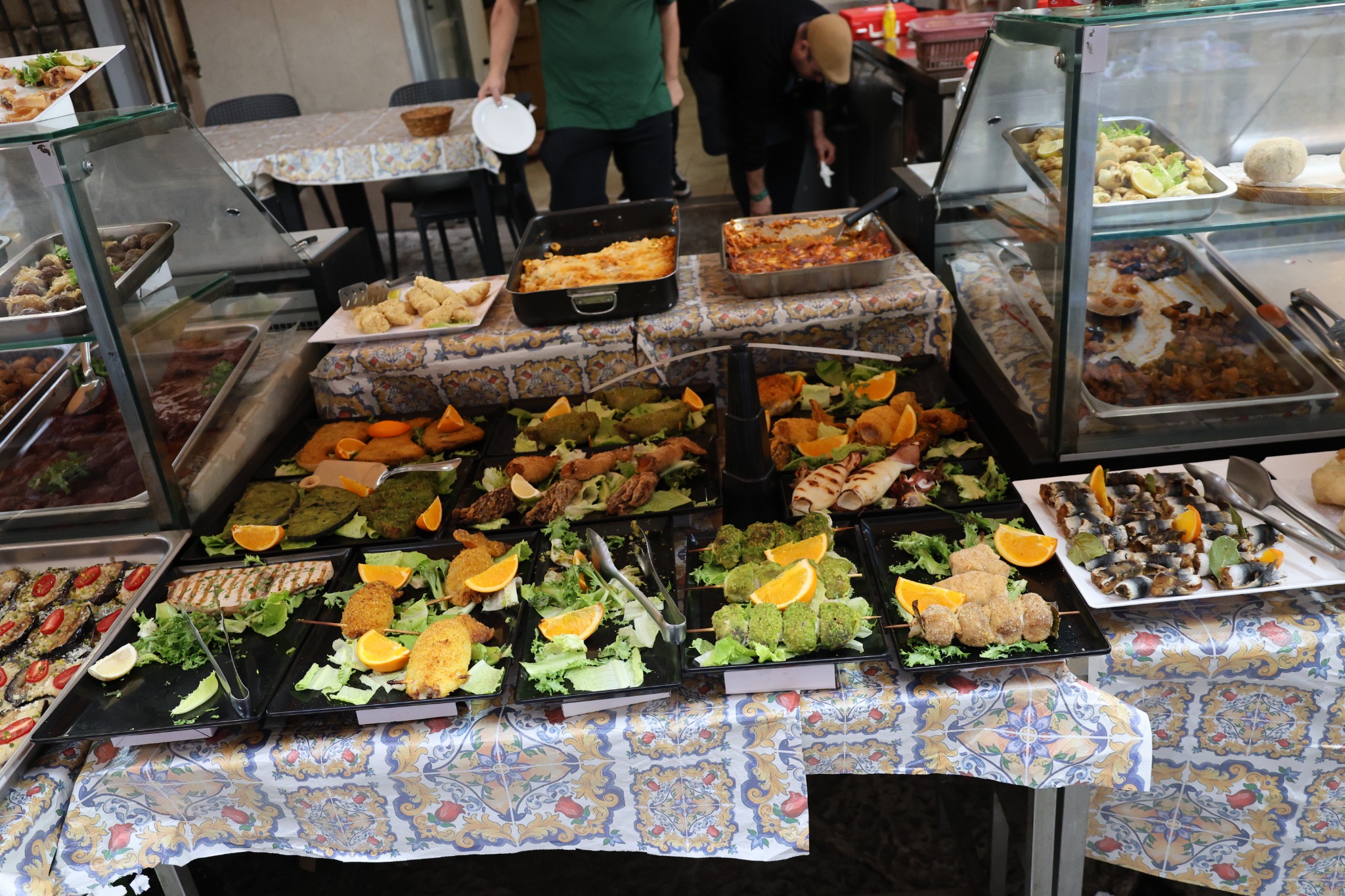
Photo: Media Gallery
At this Capo market stall, the sardines sit on the right on a white platter: about twenty rolls, silver skin on the outside, tails pointing up, with orange slices and a bay leaf tucked in. Around them, a whole cooked-food counter on a tablecloth printed like majolica tiles. Breaded fish cutlets, green-crumbed cutlets, grilled stuffed squid, breaded balls on skewers, a fried fillet, all with orange wedges. Behind, two trays of baked pasta.
Palermo rolls, Catania sandwiches
There are two main ways to make them, and Sicilians have opinions.
Palermo. One sardine, opened like a book, spread with stuffing, rolled from head to tail, tail left sticking up. Packed into a dish with bay leaves, baked, served at room temperature. This is the version on the platter.
Catania. Two sardines, laid flesh to flesh with stuffing in between, then breaded and fried.
Messina has its own version too, sometimes finished in tomato sauce.
The stuffing
Toasted breadcrumbs are the base, the mollica atturrata that shows up all over Sicilian cooking, often standing in for cheese. Then pine nuts and raisins for the sweet side. Some cooks add a salted anchovy or two melted into the oil, orange or lemon zest and juice, parsley, sugar, grated pecorino. That sweet-and-sour pull runs all through Palermo food, and it's usually credited to the Arab centuries.
Bay leaves go between each roll in the dish. The orange goes on top, or in the juice that's squeezed over before baking.
The recipe
Serves 4 as a main, 6 as a starter
- 600 g fresh sardines, cleaned, heads off, opened flat with the backbone out (any fishmonger in Sicily will do this for you)
- 100 g dried breadcrumbs
- 30 g pine nuts
- 30 g raisins, soaked 10 minutes in warm water
- 2 salted anchovy fillets
- 1 orange, zest and juice
- ½ lemon, juice
- 1 tablespoon sugar
- A small handful of parsley, chopped
- About 12 bay leaves
- Olive oil, salt, pepper
- Toast the breadcrumbs in a dry pan with a little oil, stirring, until they smell nutty and turn golden. Tip into a bowl.
- Warm two tablespoons of oil and stir in the anchovies until they melt. Pour over the crumbs.
- Add the pine nuts, drained raisins, orange zest, parsley, a pinch of sugar, salt and pepper. Add a splash of oil until the mixture just holds when you squeeze it.
- Lay each sardine skin side down. Put a spoonful of filling at the head end, roll toward the tail and set it in an oiled baking dish with the tail upright. Pack them in close, with a bay leaf between each.
- Mix the orange and lemon juice with the sugar and two tablespoons of oil. Pour over the rolls. Scatter the leftover crumbs on top.
- Bake at 180°C for about 20 minutes, until the sardines are cooked and the top is golden.
Let them rest. They're best warm or at room temperature, and better the next day.
Where to eat them in Palermo
Most cooked-food counters at Capo and Ballarò have them, as do the old trattorie. At the fish stall in how to read a fish stall at Capo market, they're on the plaque behind the counter, listed as involtini.
If you like the flavours, the same mix of sardines, raisins, pine nuts and breadcrumbs goes into Palermo's pasta con le sarde.