Sicilian Touches in an Afternoon of Coffee and Pastries
A slice of orange on a pastry can bring Sicily to mind more readily than an elaborate dessert with an Italian name. The island has a particularly recognizable way of putting fruit, sweet dairy and pastry together. Citrus is allowed to announce itself, sugar brings out its fragrance, and something creamy usually benefits from a little crunch or bitterness. These are habits of taste that can travel quite comfortably beyond Sicily.
Look at this café table. Two small amber-brown glass cups hold coffee under a layer of milk foam, one close to the edge of the round metal table and the other behind a large blue-green plate. On the plate is a generous wedge of white cake with a thin golden base and a round, tightly layered pastry dusted with icing sugar. An entire orange cross-section sits in the middle of the pastry, its translucent flesh and reddish-orange rind catching the daylight. Forks and spoons have been laid beside the two sweets, ready for sharing.
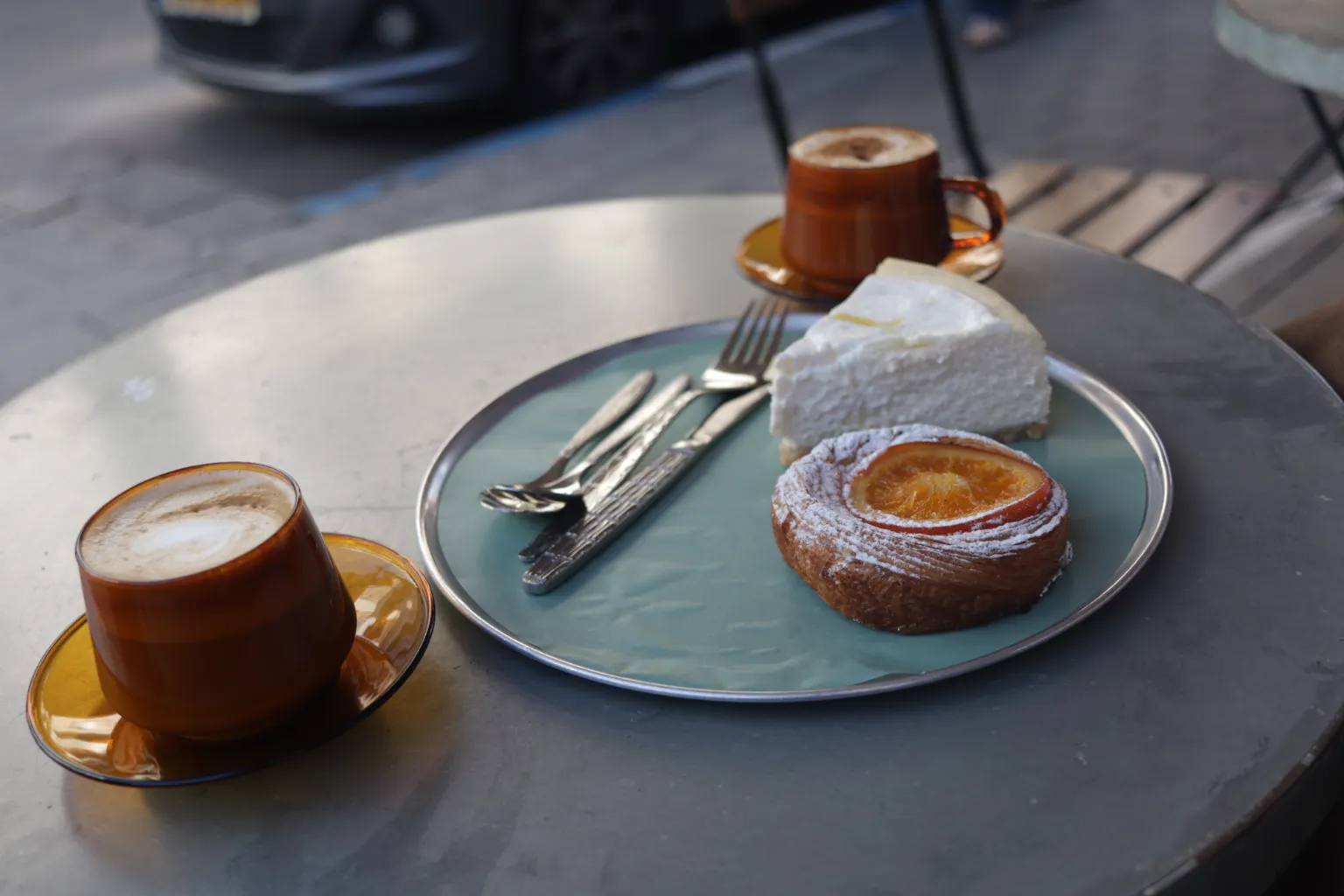
Photo: Media Gallery
The orange is part of the pastry
That orange slice is the most distinctly Sicilian touch on the table. A pastry chef could have used a little grated zest or a spoonful of orange-flavoured cream. Instead, the fruit is there in plain sight, including the rind. It has the glossy appearance of an orange cooked in syrup, a preparation that makes the peel tender and keeps some of its pleasantly bitter character.
Sicilians have long used candied citrus in their sweets. Scorza d'arancia candita, or candied orange peel, is a familiar decoration on Palermo's cannoli. Candied oranges, citron and other fruits give a traditional cassata its elaborate appearance, while small pieces of candied peel find their way into the fig filling of the Christmas buccellato. The fruit has quite a job to do in these recipes: its aroma breaks through the sugar, and the chew of the peel contrasts with soft fillings.
The layered pastry in the photograph looks like a modern café creation rather than a particular Sicilian classic. Yet that combination of browned dough, powdered sugar and a visible piece of citrus would be easy to understand in a Sicilian pasticceria.
The taste for white, creamy desserts
The other half of the plate suggests a different Sicilian preference. A thick, white, slightly textured cake rises above a modest base. It looks rather like a cheesecake, although the photograph alone cannot tell us which cheese or cream went into it. In Sicily, a pastry chef would often reach for ricotta, particularly sheep's-milk ricotta, when looking for a similar contrast of soft filling and firm pastry.
Good fresh ricotta has its own delicate dairy flavour. Sweetened and worked into a smooth cream, it forms the heart of cannoli and cassata. In cassata al forno, the baked version especially associated with Palermo, a pastry casing encloses the sweet ricotta. Each bite brings the two textures together. A little orange zest can give a ricotta filling fragrance without making it taste like orange juice.
There is a reason the two desserts look so appealing next to each other. The orange pastry is dark and crisp-looking, with sharp concentric lines; the cake is pale and soft, with a generous, almost cloudlike interior. You can alternate between them, with a sip of coffee in between.
Coffee and something to share
In a Sicilian bar, a quick caffè and a small sweet can be a very ordinary part of the day. Breakfast might mean coffee with a cornetto, or in warm weather a granita with a soft brioche. A longer stop at an outdoor table leaves room for an extra pastry and a conversation. The coffee in this photograph, with its milky foam and handsome amber glassware, is a contemporary café presentation rather than a specifically Sicilian one.
What does feel close to the spirit of the tavolata is the arrangement of two desserts on one plate. There is no need to settle the difficult question of whether to order the cake or the orange pastry. Order both, put them in the middle, and pass the fork.
For the traditional expressions of these flavours, read about Sicilian cannoli and cassata siciliana.